Step this way, ladies and gentlemen! Welcome to a journey through the “Scoular MH Museum” wing of our narrative. I’m Penny, your guide through the fascinating, often misunderstood, and remarkably resilient history of factory-built living. If you’ve ever looked at a modern multi-sectional home and wondered how it shares DNA with a 1920s “tin can” trailer, you’re in for a treat.
The mobile home history is not just about wheels and hitches; it is a story of American ingenuity, responding to economic crises, and eventually, a triumph of manufactured home design. So, let’s dust off the blueprints and see how we got from the roadside to the residential estate.
1920s: The Dawn of the Nomad Spirit
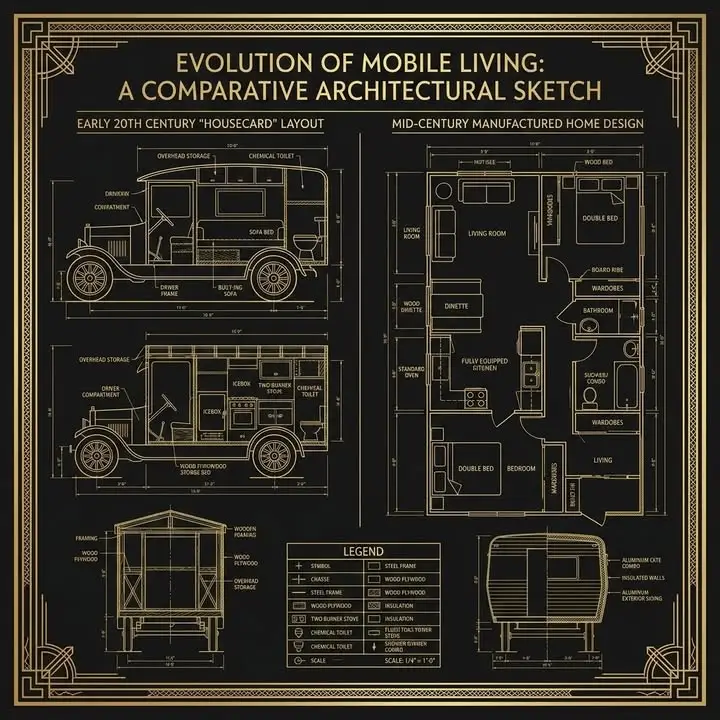
In the early 1920s, “homes” on wheels weren’t homes at all, they were adventurous experiments. These early house trailers were essentially wooden boxes on Model T chassis, designed for weekend camping and the burgeoning spirit of the open road. At this stage, the “trailer” was a hobbyist’s dream, providing a portable bedroom for those brave enough to navigate the unpaved highways of the era.
1930s-1940s: From Recreation to Necessity
As the Great Depression gripped the nation, the trailer underwent a radical transformation. No longer just a vacation toy, these units became vital permanent housing for families who had lost everything.
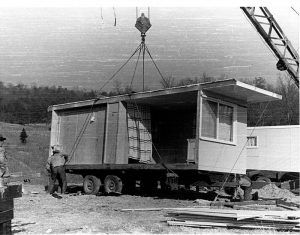
When World War II arrived, the industry shifted into high gear. The government commissioned thousands of trailers to house workers at shipyards and munitions plants. By the time the boys came home, the housing shortage was so acute that the “trailer coach” became a primary solution for veterans starting new lives. We began to see the first hints of modern manufactured homes taking shape as manufacturers realized people weren’t just passing through, they were staying.
1956: The Industry Grows Up (Literally)
If you were walking through a trailer park in 1955, you’d mostly see narrow, eight-foot-wide units. But 1956 brought a revolution: the introduction of the 10-foot wide unit. While two feet might not sound like much to a giant, it was a seismic shift for interior design, allowing for actual hallways and private bedrooms.
If you’re interested in seeing the specific layout of these mid-century marvels, you must explore our RV Founders Hall, where we keep the history of these pioneers alive.
1967-1969: The “Double-Wide” and Financial Legitimacy
By the late 60s, the industry was thinking big. Really big.
- 1967-1969: The development of double-wide units allowed factory-built homes to finally rival site-built houses in square footage and aesthetic appeal.
- 1969: In a landmark move, the Federal Housing Administration (FHA) authorized mortgage insurance for these homes. This wasn’t just about extra space; it was about the financial world finally acknowledging these structures as legitimate real estate.
1976: The “Big Bang” of the HUD Code
Before June 15, 1976, “mobile homes” were a bit like the Wild West, standards varied wildly from state to state. Everything changed with the National Manufactured Housing Construction and Safety Standards Act.
The establishment of the HUD Code mandated national standards for:
- Structural integrity and wind resistance.
- Fire safety (which drastically reduced fire-related incidents).
- Energy efficiency and plumbing/electrical systems.
This was the line in the sand. Any unit built after this date is technically a “manufactured home,” while anything built before is a “mobile home.”
1980: A Name to Reflect Reality
By 1980, the industry was tired of the “mobile” stigma. Federal law officially replaced the term “mobile home” with “manufactured home” in all government literature. It was a clear signal to the public: these aren’t vehicles that might roll away at any moment; they are high-quality, permanent residences built in a controlled factory environment.
Planning a visit to see these historical shifts in person? Be sure to check the official website for any blackout dates before you hitch up your own rig.
2000: The Manufactured Housing Improvement Act
The turn of the millennium brought the Manufactured Housing Improvement Act of 2000. This wasn’t just a minor update; it created a consensus committee to ensure the HUD Code stays modern. It also strengthened installation standards, ensuring that a manufactured home is only as good as the foundation it sits upon.
The Modern Era: Architecture and Innovation
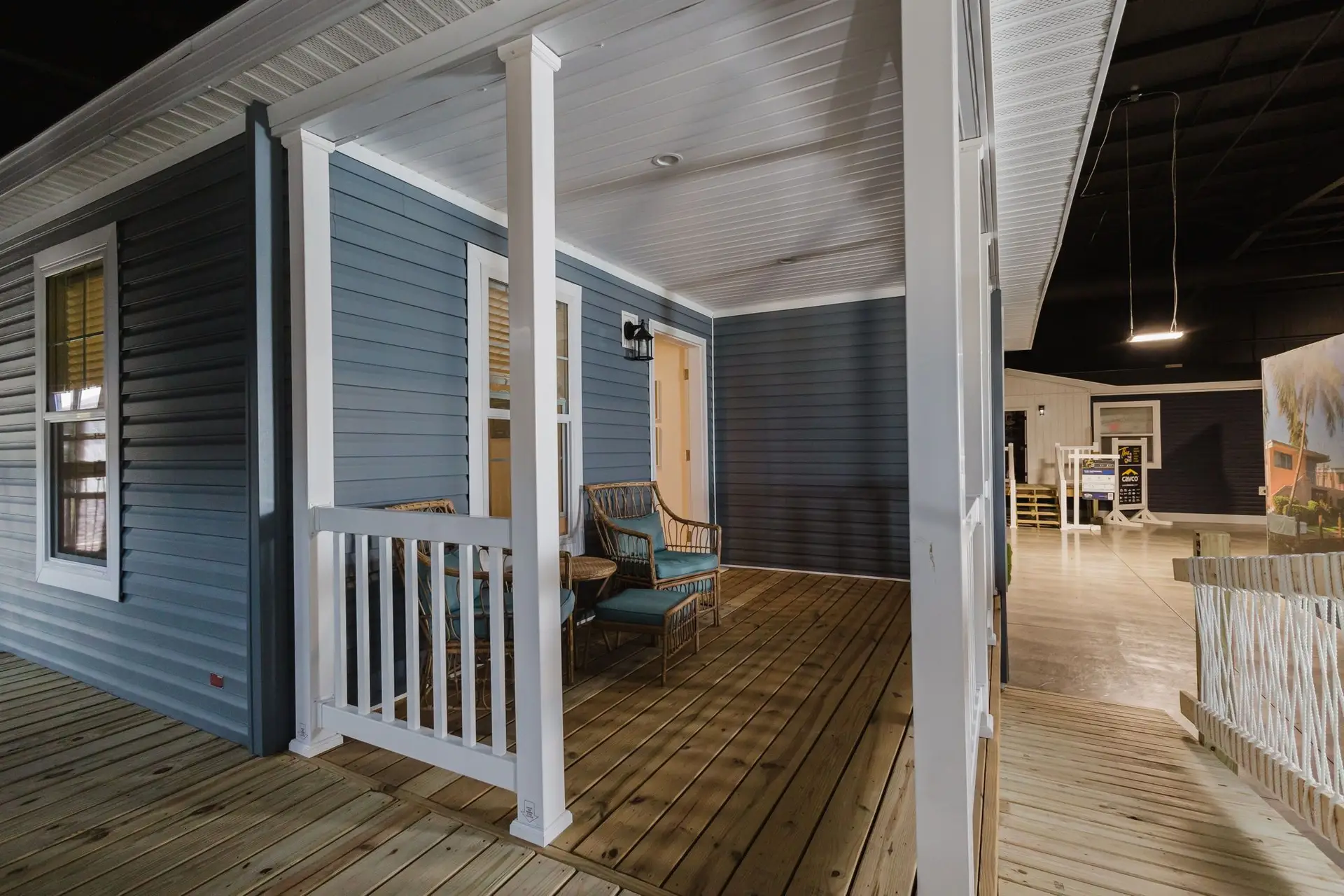
Today, manufactured home design has reached heights the 1920s campers could never have imagined. We see granite countertops, 9-foot ceilings, and energy-efficient systems that often outperform site-built homes. Recent trends include:
- Sustainable Materials: Using recycled and low-VOC materials to improve indoor air quality.
- Smart Home Integration: Factories are now pre-wiring homes for full automation.
- Architectural Diversity: From modern minimalist “tiny homes” to sprawling multi-story estates that are indistinguishable from traditional housing.
Come Visit the Legends in Elkhart
There is no substitute for standing in the presence of history. At The RV/MH Hall of Fame & Museum in Elkhart, Indiana, you can walk through the very units that defined these milestones.
Whether you’re a history buff or a professional in the housing sector, our exhibits offer a deep dive into the manufactured housing legacies that shaped the American landscape.
Visitor Information & Operational Notes:
- Overnight Parking: We love our travelers! Please note that overnight boondocking for museum guests is limited to 2 nights unless pre-arranged with our staff.
- Event Space: Looking for a unique venue? Our Northern Indiana Event Center is perfect for conventions and celebrations.
- A/V Support: While we offer versatile space, in-house AV support is limited. We highly recommend our preferred vendor, EA Pro Music, for all your technical needs.
- Blackout Dates: Always advise checking our website for blackout dates or special event closures before traveling.
Thank you for joining me on this stroll through time. I hope to see you soon under the lights of our museum halls, where the history of home is always on display.
{“@type”:”BlogPosting”,”image”:[“https://www.thervmhhalloffame.org/wp-content/uploads/Of5HdZApd9H.jpg”,”https://www.thervmhhalloffame.org/wp-content/uploads/fsUWzKdNviY.jpg”,”https://www.thervmhhalloffame.org/wp-content/uploads/Lxkdm5WZosd.webp”,”https://www.thervmhhalloffame.org/wp-content/uploads/lMcrva7kmZt.webp”,”https://www.thervmhhalloffame.org/wp-content/uploads/KGAarrE0heI.webp”],”author”:{“url”:”https://www.thervmhhalloffame.org”,”name”:”The RV/MH Heritage Foundation Inc.”,”@type”:”Organization”},”@context”:”https://schema.org”,”headline”:”The Evolution of Manufactured Housing: From Trailers to Modern Homes”,”keywords”:”manufactured home design, mobile home history, manufactured homes, HUD code, RV/MH Hall of Fame”,”publisher”:{“logo”:{“url”:”https://www.thervmhhalloffame.org/wp-content/uploads/CDwfDZRrjEk.png”,”@type”:”ImageObject”},”name”:”The RV/MH Heritage Foundation Inc.”,”@type”:”Organization”},”description”:”Explore the comprehensive history and evolution of manufactured housing, from 1920s travel trailers to modern luxury manufactured homes and the pivotal 1976 HUD Code.”,”datePublished”:”2026-07-23″,”mainEntityOfPage”:{“@id”:”https://www.thervmhhalloffame.org/the-evolution-of-manufactured-housing”,”@type”:”WebPage”}}